We decided at the beginning due to the site, and additional costs we wouldn’t go fully certified Passivhaus and hence didn’t use PHPP. Instead we used a Thermal Model created by our MEP Consultants Kyoob.
As we were still thinking about our specific designer we based our heat loss calculations on the MBC Timber Frame standard values.
Heat Loss
What does heat loss mean … it’s the amount of heat lost through the fabric of the house e.g. windows, doors, walls, roof, floor which is impacted not only by insulation but how airtight the house is and how the design prevents cold bridging (cold spots).
Through modelling it becomes very obvious that once you reach a certain level of insulation, the air-tightness becomes the key factor .. we modelled high insulation low airtightness and then passivhaus standard airtightness and the results are pretty amazing (note these are with insulation which is significantly better that Part L Building Regulations)
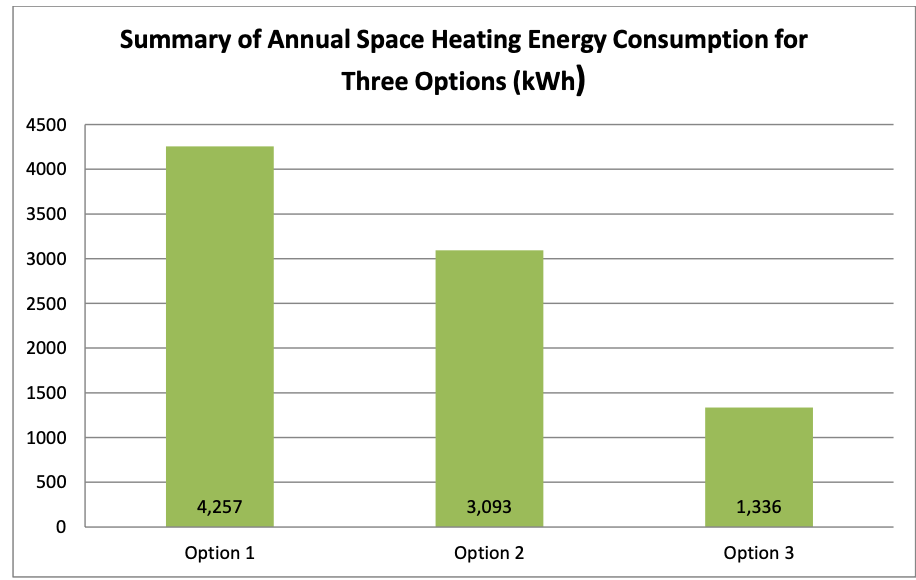
Over Heating
A new part of the building regulations is Part O and is associated with over heating, once you have an airtight house, and large expanses of glass facing either South or West the amount of heat generated through the Glass is quite significant, and today’s regulations requires you to prove that you can prevent the overheating and / or purge the excess heat out of the building.
We have a very large 5m Sliding door on the South side so over heating is always a concern. Again we used the Thermal Model to understand what impact this will have on room temperatures and various mitigations such as opening windows, air conditioning or mechanical ventilation
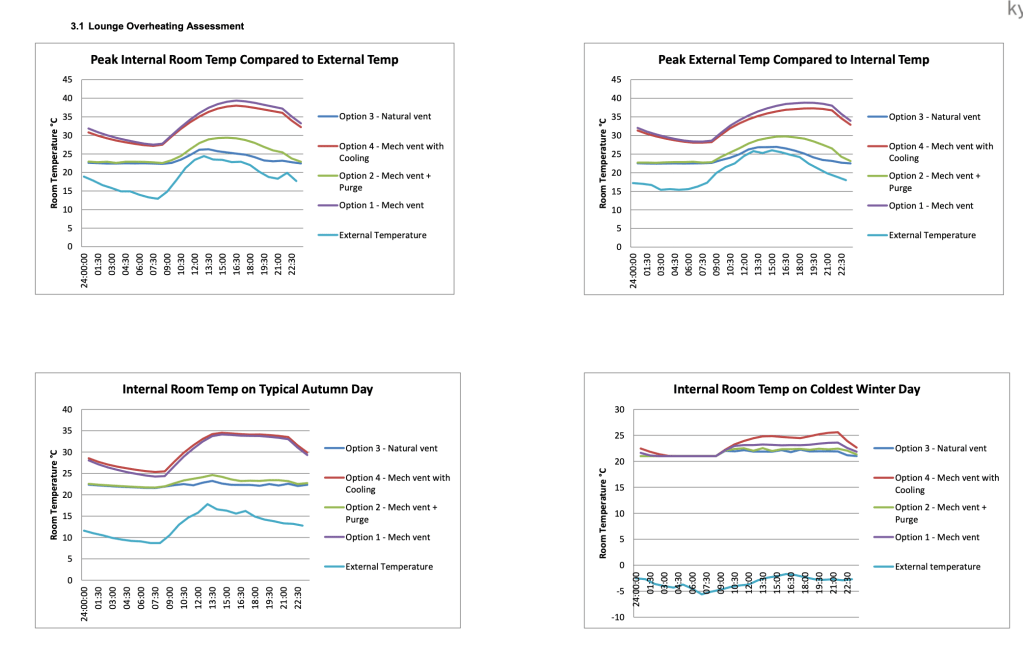
The summary of the modelling is that without any mitigations that the temperature in the living room could easily reach 35+ degrees on a warm day.
We had already included a veranda on the south side and this did have a significant impact
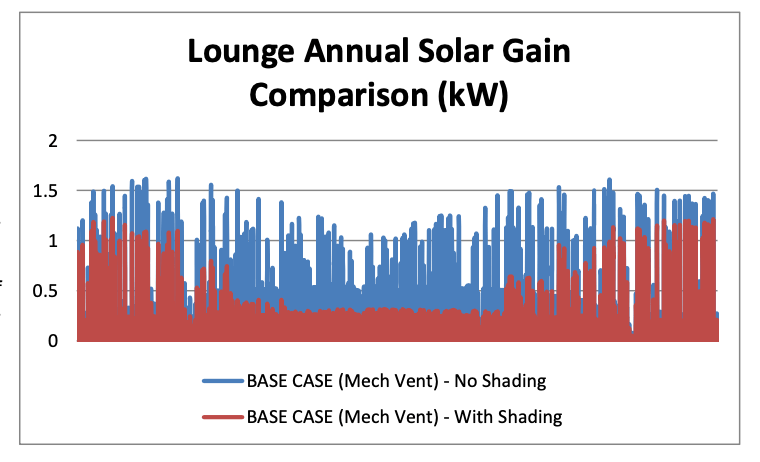
Changes to the design were needed to ensure that we passed the Part O assessment (we haven’t completed this assessment yet, but will post a blog when we do) so as part of the design, we created an additional opening window to enable purge ventilation in the master bedroom, and added external blinds to the large sliding doors and the master bedroom windows. These can be closed on hot days to reduce the overall overheating.
Space Heating Requirements
Taking all this information into account, we modelled each room for heat loss, gain and heating requirements which gave us an overall peak heat loss at -5 degrees of 2.26Kw. We’ve validated this as we had lost trust in Kyoob using this online heat loss calculator. Which validated the results.
Passivhaus actually dictates 10W/m2, our peak heating is calculated at 11.3W/M2.
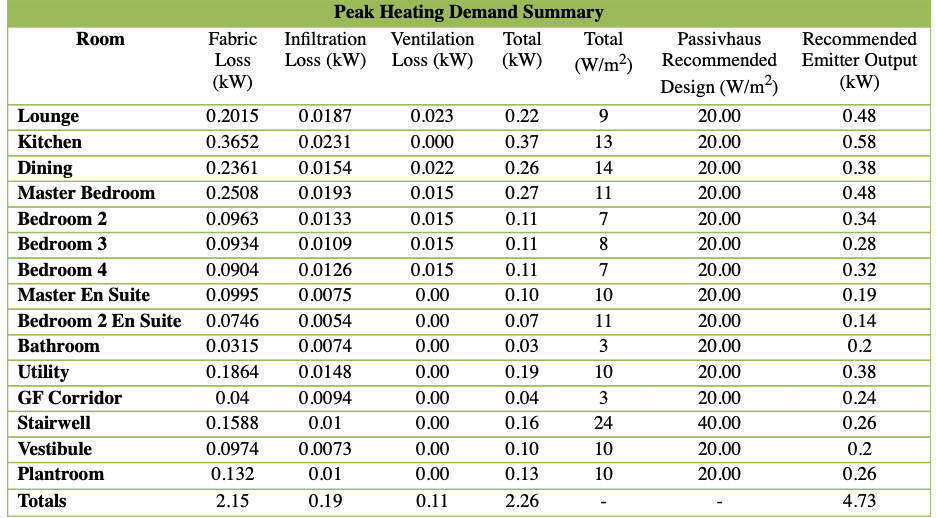
As we are an upside down house, we are not really suitable for underfloor heating in our opinion, so our output will be radiators, the Passivhaus standard suggests that a 200% uplift is made to the heat requirements – this is a bit of a strange statement and we’ve only paid lip service to it, additionally it is very rare for the temperatures to drop to -5 Degrees given our coastal location so we are very confident in these numbers. These will be further validated after our first airtightness test.
Using this information our Heating Design could be finalised which I’ll outline in a different post.
 Point North, Gloster Hill Self Build