Warning .. ‼️ Warning ‼️ Geeky post
Myself and Fiona have probably bored people with our talk of insulation and air tightness. But it’s absolutely critical to the build and we’ve also put our expectations in the contract with GRS, which they were happy to accept.
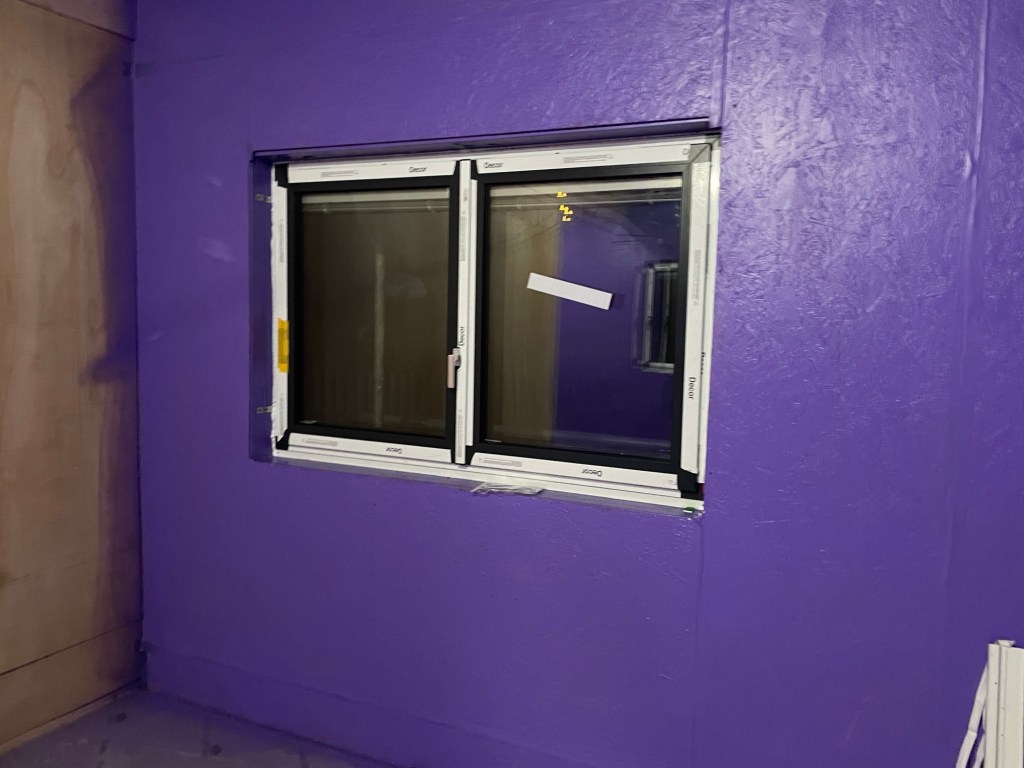
Insulation is pretty easy, just add more and everyone has been told to put more insulation in the loft. But doing a new build is slightly different as there becomes a limit to the effectiveness of insulation if the heat is just ‘leaking’ out of the house. One of our mitigations of this was the purple paint as discussed here Roof, purple paint and lots of wind
I’ve got sensors in the building and even without heating the building is holding its ‘heat’ just from people and solar (through windows).
But to really test how good the build is and how it will hold heat and stop drafts (i.e. make the house comfortable) including how effective the purple paints, attention to detail and air taping we need to test. The air tightness test is commonly called a ‘blower test’ and we’ve commissioned EasyEPC to test our building. Remember our target is Passivhaus 0.6 ACH compared to Building Regulations of 5.0.
First Test
We did our first test on the middle of January. This was before we’d finished the floor and none of us be really knew what to expect.
On the morning before the test we taped up all the ‘drain pop ups’ and then waited for Simon our tester to attach a big fan to our front door.
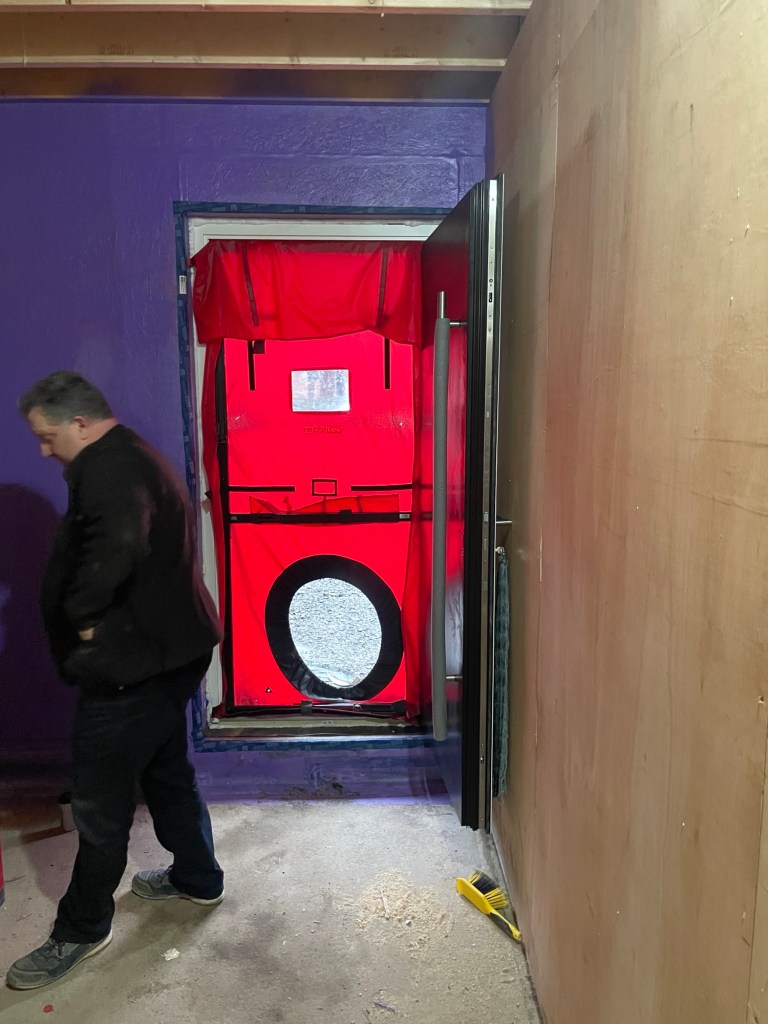
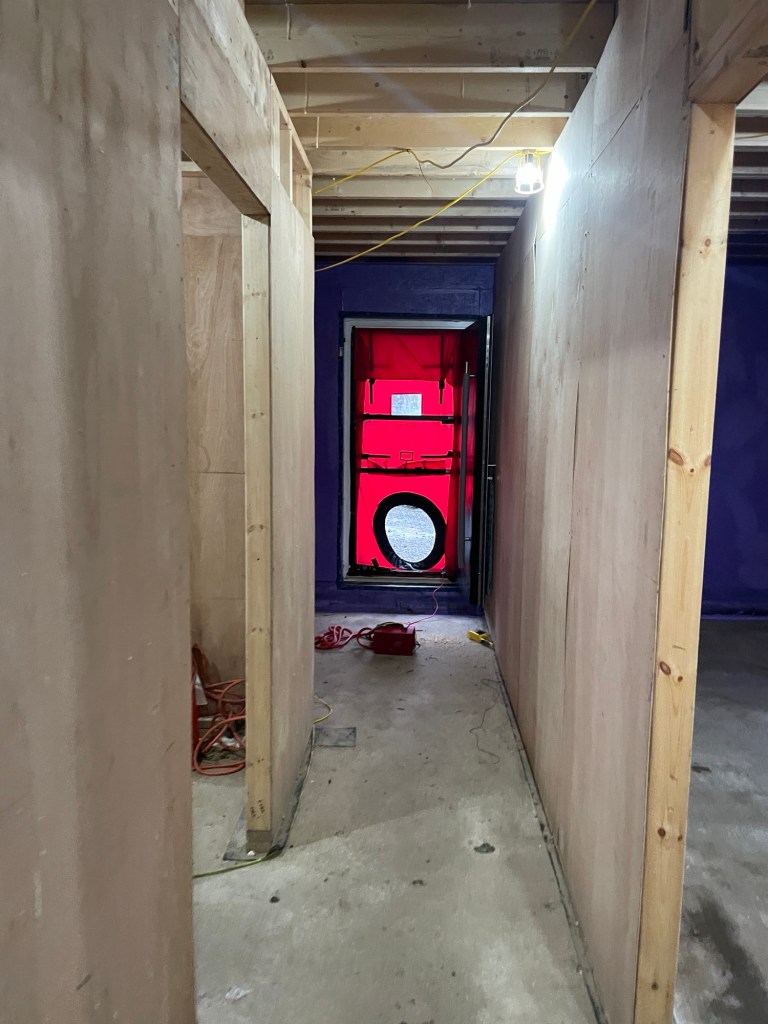
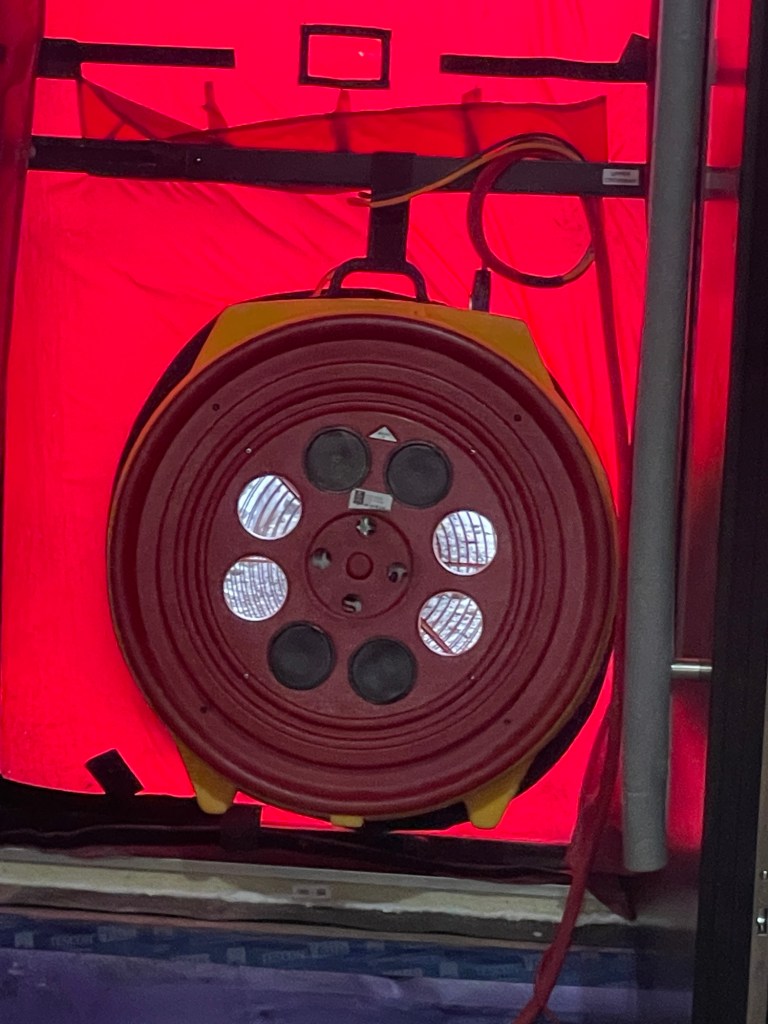
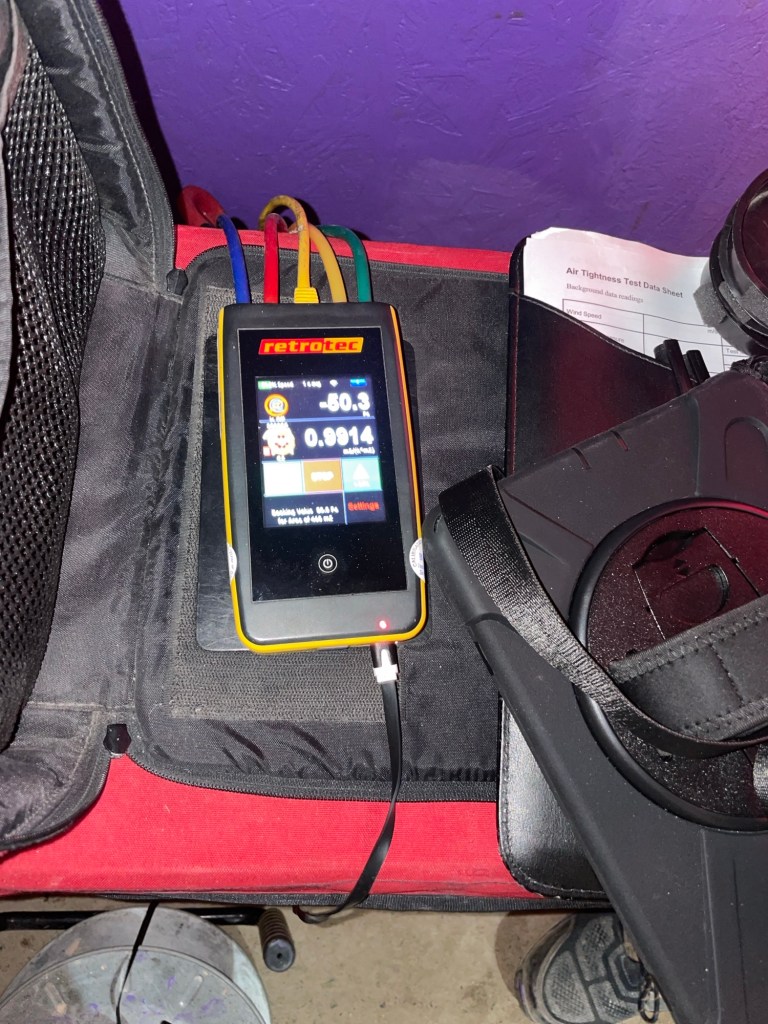
The big fan effectively either blows air into the building or sucks air out of the building and the computer and device measures the pressure change.
Before we realised what was going on Simon started the ‘pressurise’ test, taking 9 readings and then took the fan out , turned it around, and ‘depressurised’ the house taking another 9 readings.
Once completed he told us the results and it wasn’t quite what we were expecting. The air leakage was between 1.7 (depressurise) and 1.8 (pressurise). These were measured in m3 per hour per m2 as opposed to Air Changes a quick calculation meant that our airtightness was 1.39. Not good …
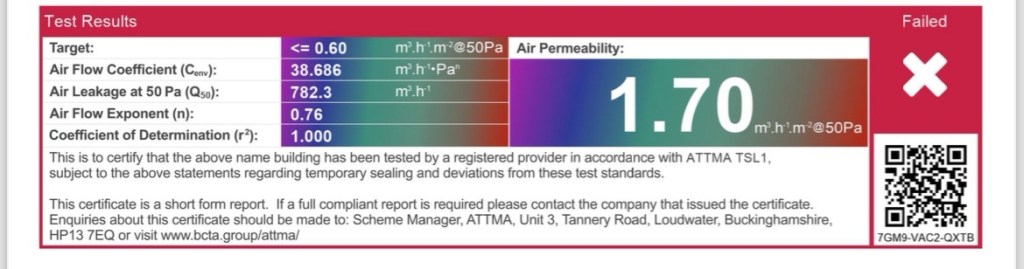
Simon then ramped up the fan to double the pressure and we went searching for air leaks which meant running our hands around and feeling the air flowing from outside to inside. We discovered a couple of major issues, firstly around the base (sole plate) and secondly around the windows. Both were expected but we didn’t realise the impact. We went round putting some temporary tape on the worst places and did a quick measurement which moved the dial to just under 1.0 so we knew that with some care we could fix the issues …
Second Test
Moving on a few weeks and using the information from the first test we worked with Ross (Green Roof Structures) and Keith from KLi to carefully seal the DPM with airtightness tape against our purple painted OSB before the floor insulation was installed and Ross’ Team carefully air taped the windows.
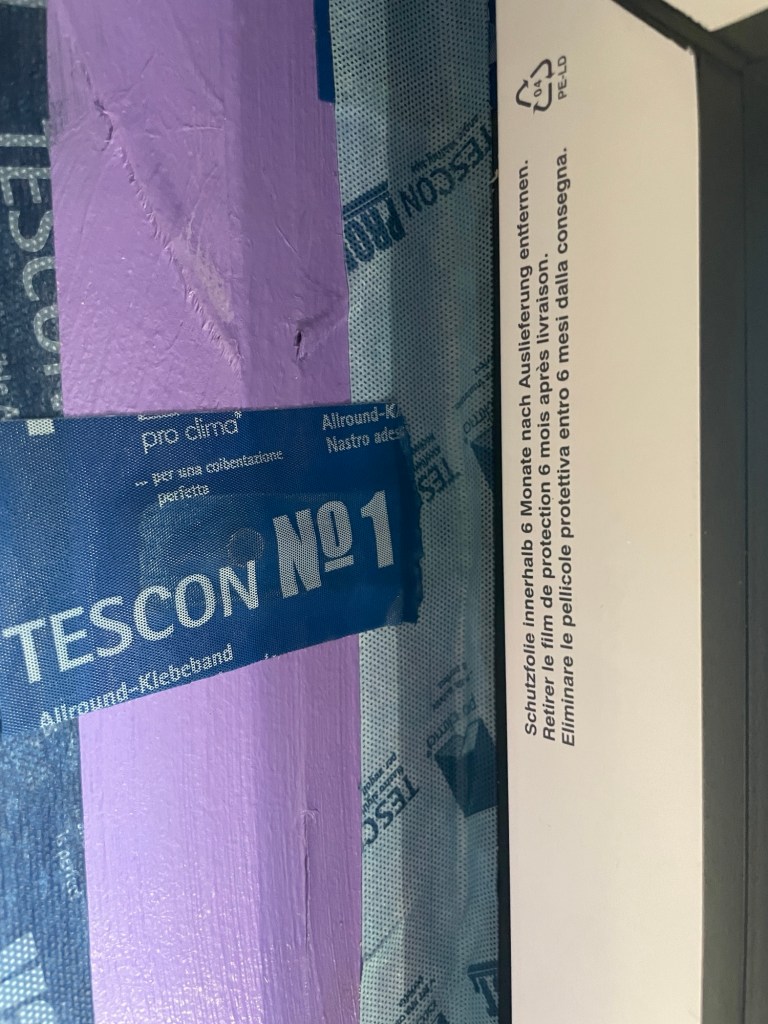
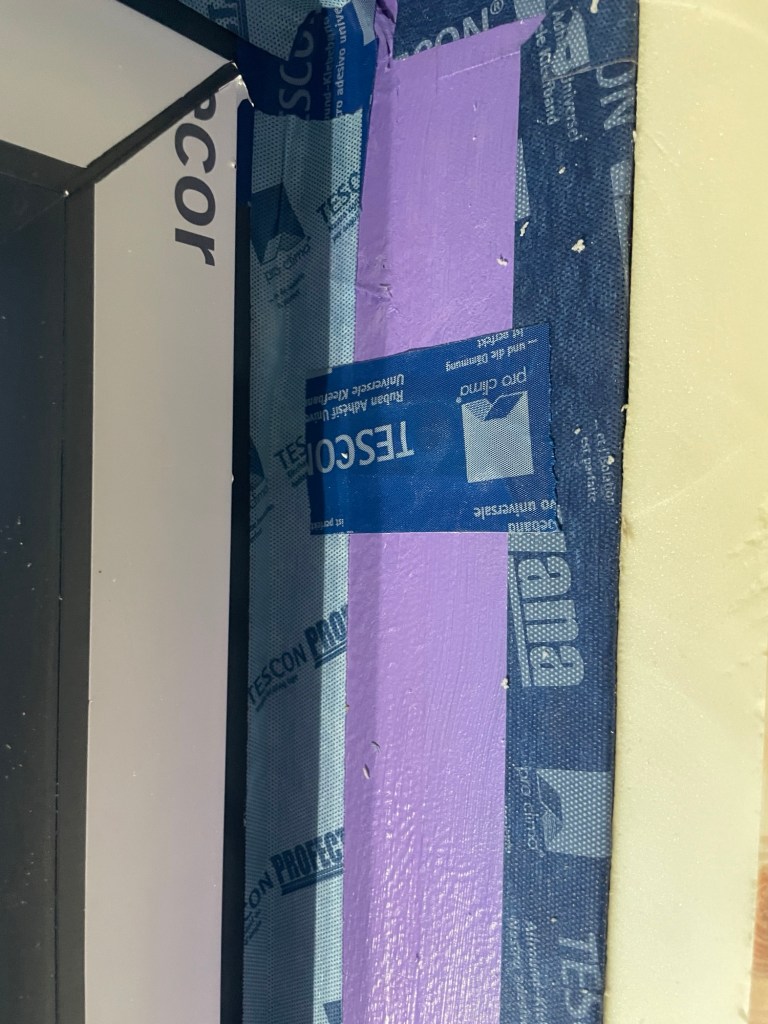

Taping the DPM to the OSB before insulating the floor
And the the test started. Myself and Fiona lit some Joss Sticks (probably left over from our university days) and had decided to see if we could quickly fix any leakages with more Tape, but Simon told us that we had to stop moving as our movement was effecting the pressure in the house .. this was good sign ….
Finally we got some solid readings. 0.5 meters cubed per hour per meter squared (air leakage not air changes) this was looking better than good.
Simon reversed the fan and the house was depressurised .. we stood still and waited. 9 readings later we got the average. 0.55 ..
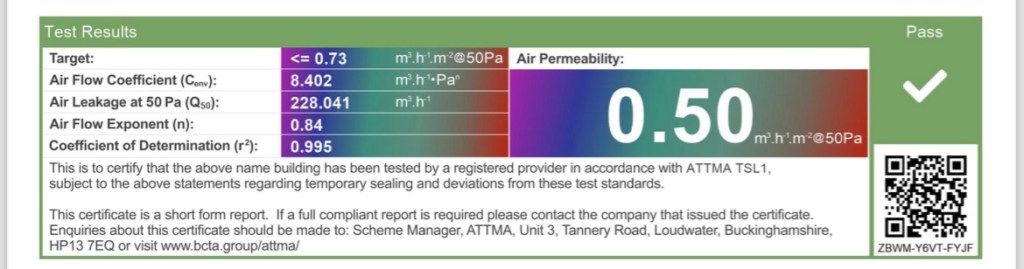
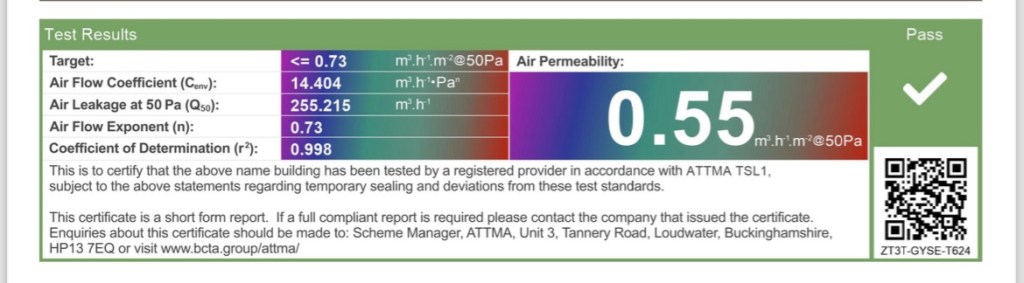
Simon cleared his stuff away and sat in his car processing the data to provide us with an Air Changes per hour figure. We waited …
Final results…. an average of 0.43 air changes per hour.

The passivhaus target ( our target) is 0.6!
I quickly ran this through my heat model to understand the impact (along with our super insulation). And here are some facts
For year of average outside temperatures to heat our house to a constant 21 degrees will approximately cost:
- £19 per year less than we’d planned
- £127 per year less than a house built to passivhaus standards
- £700 per year less than a house built to England Building Regulations.
That’s if my excel model is correct of course ! 😂
Note: assuming ASHP heating with average annual SCOP of 3.0 (just in case anyone writes to More or Less on Radio 4)
We will need to do one more test for building control just before moving in furniture, this will be used in our final EPC score.
 Point North, Gloster Hill Self Build
Leave a reply to Boarding, plastering, cladding and even some paint – Point North, Gloster Hill Self Build Cancel reply